WoW Auction House Guide for Beginners: Deposits, Undercutting and What to Sell on a Fresh Realm
A wow auction house guide for beginners on a fresh vanilla realm: deposits, auction lengths, undercutting, stacks, neutral houses and what to sell or vendor.

Most new players treat the auction house as a place to buy things, and leave a good share of their gold on the vendor. On a fresh realm that is an expensive habit: in the first weeks almost everything a levelling character picks up, from cloth and ore to herbs and the odd green, is wanted by someone levelling a profession. This wow auction house guide explains how the vanilla auction house works, what the deposit and the cut cost you, how to price without starting a war, and which goods are worth posting, for a beginner on a vanilla-era realm such as WoW Forever.
Where and what you need
Where. Each faction has auction houses in its capitals: Stormwind, Ironforge and Darnassus for the Alliance, Orgrimmar, Undercity and Thunder Bluff for the Horde. The houses of one faction share the same listings, so it does not matter which city you post from. Three neutral houses, in Gadgetzan, Booty Bay and Everlook, share a separate list that both factions can see.
Deposits and cuts. Posting an item costs a deposit based on its vendor value and the auction length. If the item sells, you get the deposit back with your payment; if it expires, the deposit is lost and the item comes back by mail. When an item sells, the house keeps a cut of the price, around 5% at the faction houses and around 15% at the neutral ones, and the neutral deposits are higher as well.
Durations. Vanilla offers three lengths, usually 2, 8 and 24 hours, and the deposit grows with the length. Check the exact options and costs in the posting window on your realm.
Mail and bag space. Every sale, expired auction and outbid refund arrives by mail, so post near a mailbox and keep a bag free for stock.
A bank alt. Many players park a second character in a capital to hold stock and post auctions. It is optional, but saves riding back to town.
The route
The numbers follow one selling session, from the moment you reach town to logging off.
- Empty the mailbox. Collect sales, refunds and returned items first.
- Vendor the junk. Sell gray items and anything in the vendor column of the table below before you open the auction house.
- Search before you post. Note the lowest few prices per unit, not per stack; one silly listing is not the market.
- Price with a small undercut. Post just below the cheapest sensible listing, by a copper or a few percent. Cutting the price in half wins one sale and teaches everyone else to do the same.
- Sell in the stacks buyers want. Cloth in 20, ore and herbs in 5, 10 or 20, bars in the sizes recipes use. Odd numbers sell slowly.
- Pick the length. Short auctions for busy evenings and fast-moving goods, 24 hours for slower items and before you log off for the night.
- Use the neutral house only when it pays. They suit cross-faction trades or a flooded home market; the higher cut makes them a poor default.
- Repost or vendor. If an item expires twice at a fair price, lower it or vendor it.
What you get
| Item | Sell or vendor | Why |
|---|---|---|
| Linen, Wool, Silk and Mageweave Cloth | Sell, in stacks of 20 | Tailors and First Aid levellers buy all of it on a fresh realm |
| Copper, Tin, Iron ore and bars | Sell, in stacks of 5–20 | Blacksmiths, engineers and miners levelling their skill need thousands |
| Herbs such as Peacebloom, Silverleaf and Briarthorn | Sell, in stacks of 5–20 | Alchemists level on them; early prices are high |
| Light and Medium Leather | Sell, in full stacks | Leatherworkers burn through it quickly |
| Green items | Sell if the stats fit a popular class, vendor if not | Good weapons and caster gear sell; odd stat mixes sit unsold |
| Gray items, broken weapons, ruined scraps | Vendor | Nobody buys them and the deposit can cost more than they earn |
Time it takes
A selling session with five to ten kinds of goods takes roughly 15–25 minutes once you know your prices, and closer to 40 minutes the first few times. Posting every evening instead of once a week keeps you near the top of each list.
As for income, a levelling character who stops vendoring cloth, ore and herbs usually earns roughly 30–100% more per hour of play than one who sells everything to the vendor, depending on realm age and how busy the market is. The first months of a fresh realm pay the most; as more players reach 60 and the supply grows, prices fall and your margin moves to rarer goods such as Thorium, Runecloth and high-level herbs.
Tips
- Compare prices per unit, never per stack, before you decide what to post.
- Undercut by a little, not by half, so the market does not collapse under you.
- Post near a mailbox and check it every session so expired goods do not pile up.
- Keep a short note of what each of your goods sold for last week.
- Sell common goods quickly; holding stacks for a better price rarely pays on a fresh realm.
- Only use the neutral houses for cross-faction deals or a flooded home market.
Running it with ForeverBot
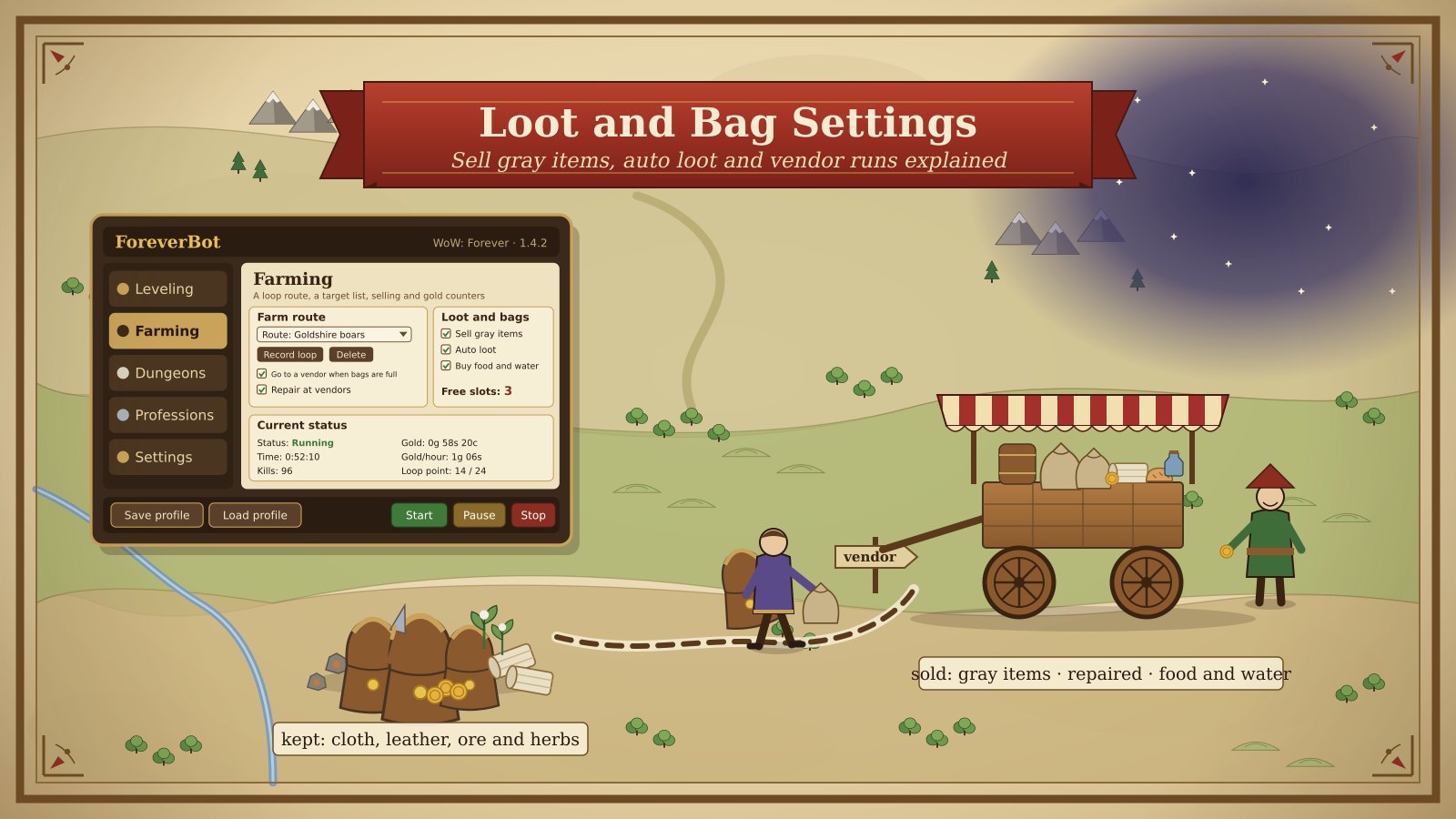
The bot does not post auctions; pricing and posting are yours. What ForeverBot does is gather the goods worth posting. In the Farming section, build a loop with Record loop, add the right mobs with + Current target, and turn on the Mining / Herbalism / Skinning toggles that match your professions with Remember nodes ticked. Keep Sell gray items on so only junk goes to the vendor, and watch Gold/hour and Nodes gathered to see which loop feeds the market best.
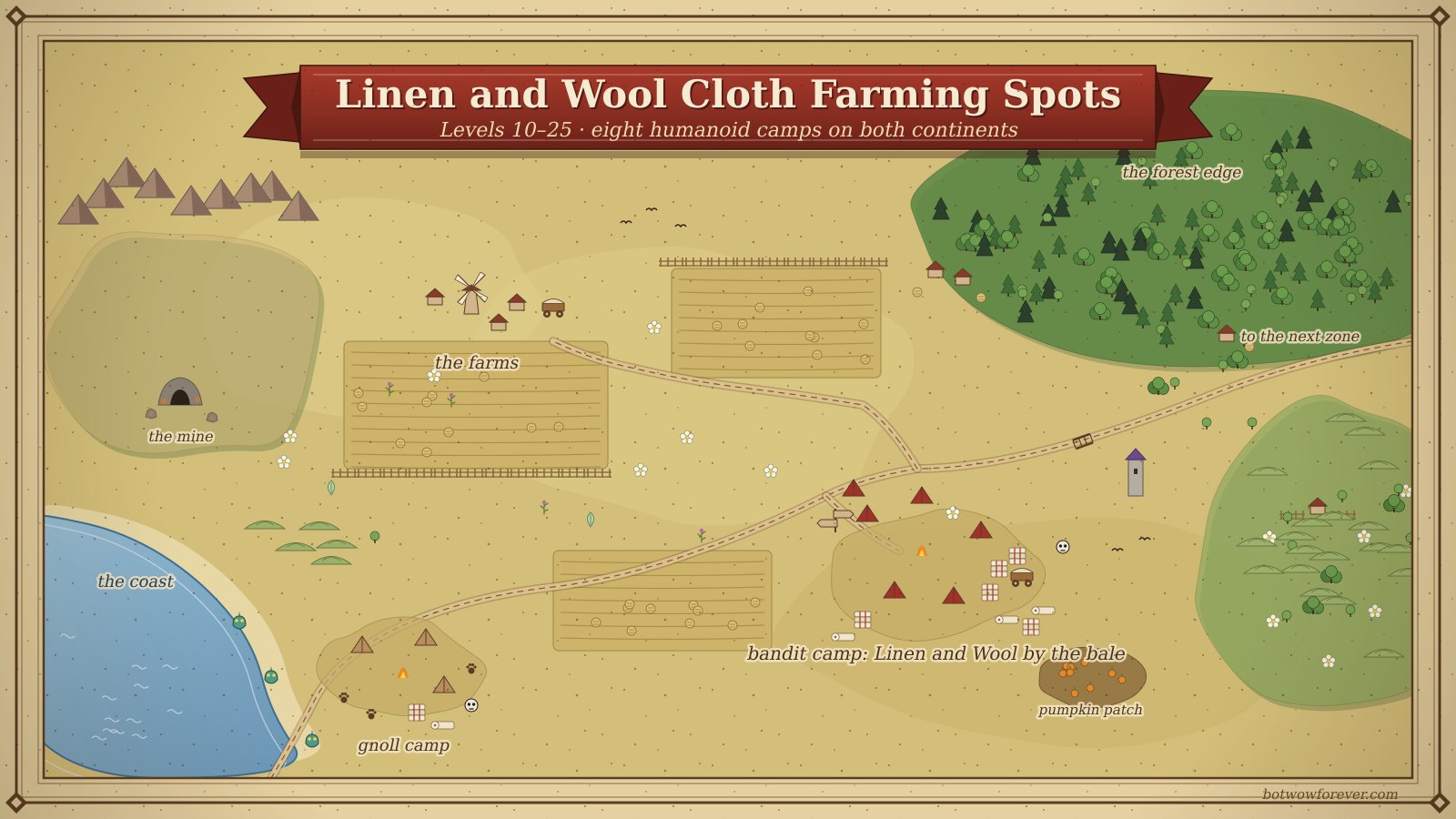
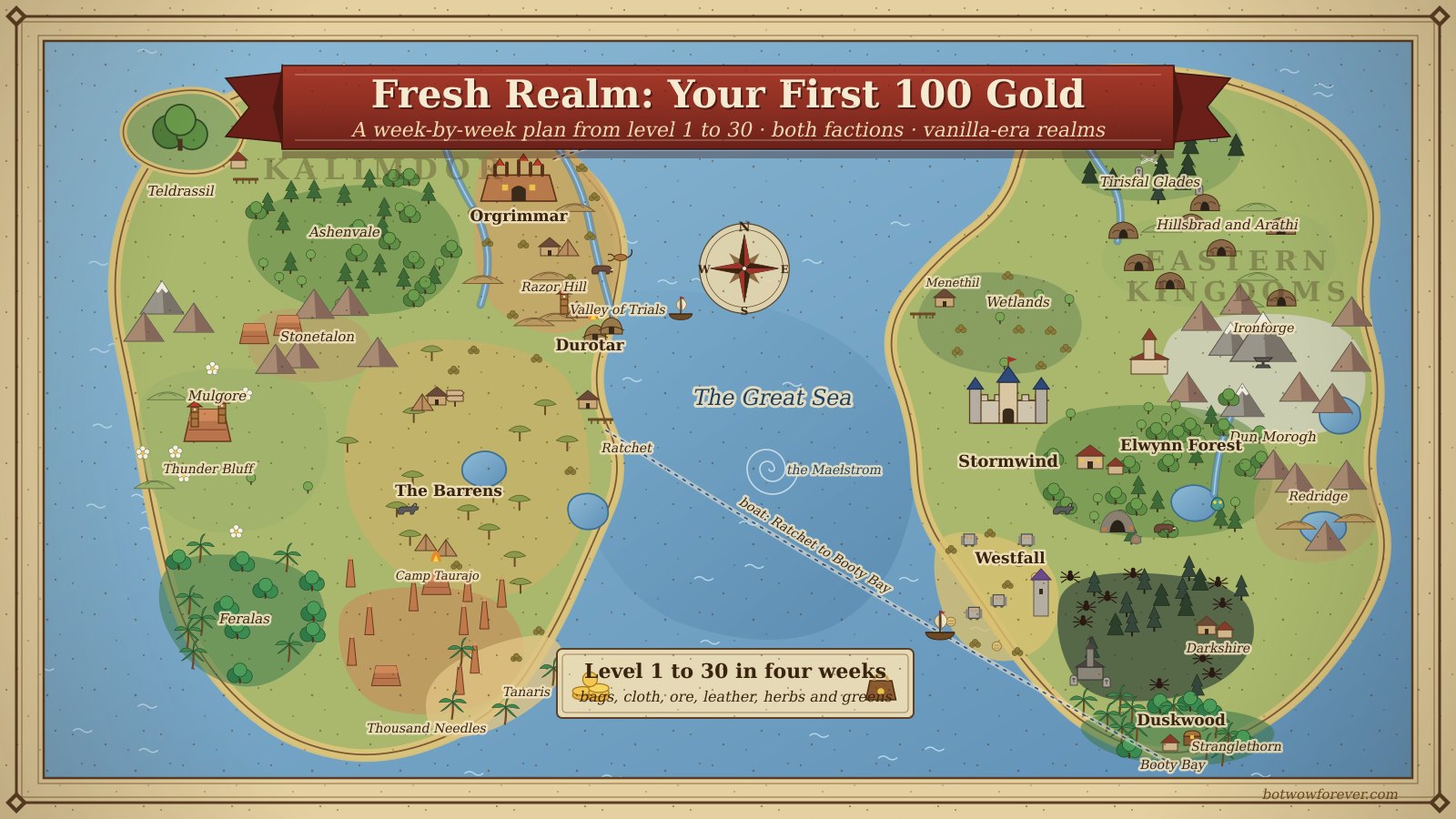
For starter goods, see the linen and wool farming spots and the copper ore routes; for a first savings plan, the fresh-realm first 100 gold guide. Every section comes with every plan; see plans and pricing.
FAQ
What sells best on the auction house on a fresh realm?
Profession materials. Cloth, ore, bars, herbs and leather sell fastest in the first months because everyone is levelling a profession and few have time to farm. Gray items and most vendor trash do not, so sell those to a merchant.
Should I use the neutral auction house?
Only for a reason. The houses in Gadgetzan, Booty Bay and Everlook let both factions trade, which is useful for an item your own side lacks or a market that is flooded at home. They take a larger cut of each sale and ask a higher deposit, so for everyday selling your own faction's house pays better.
How much should I undercut?
A copper or a few percent below the cheapest sensible listing is enough, because a tiny undercut puts you at the top as well as a big one does. Cutting deeply loses you money and pushes everyone else to follow, which lowers prices for the whole market and for your next sale too.
Want the farming done for you? Get the bot